
Liberation
Vernal equinox in north central Iowa

Fenceless sections lay denuded,
sliced by nitrate drainage ditches.
Slate-black table-flat barren acres
are slashed by Alberta clippers;
ravaged by century torrents.
Sculpted roadside snowdrifts
are rimmed in organic hues,
granules exiled from fickle markets
like the youngbloods lost forever
as they chase lightning in a bottle.
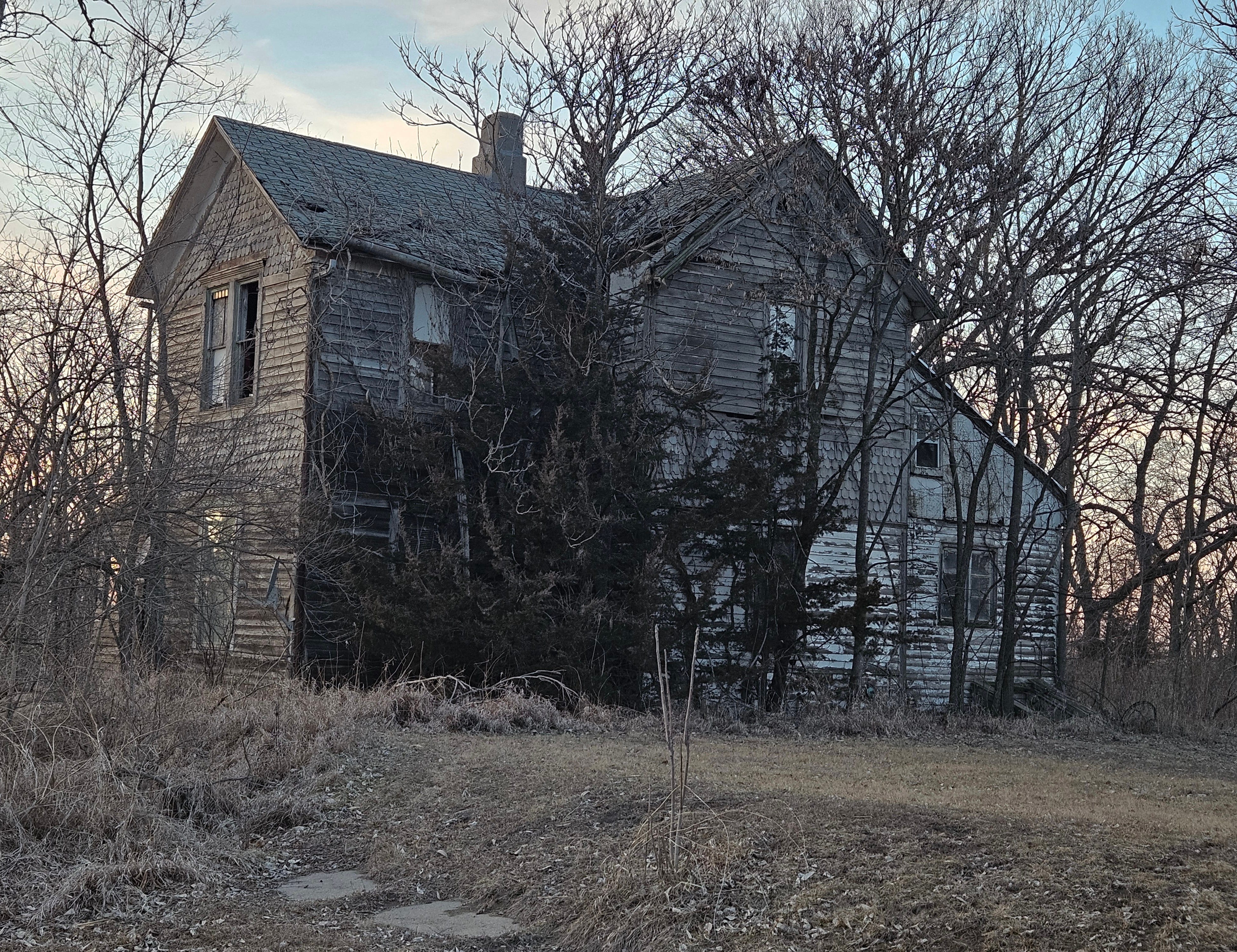
I traversed north central Iowa recently on my book tour, marveling at straight-line horizons and the biggest skies in creation. Saddened by indifference to soil preservation as the richest soil on our planet didn’t have a molecule of corn stubble left to hold it in place. Talcum-fine earth is left defenseless as it erodes while awaiting spring planting.
Our resources have been exploited for far too long, paralleling the brain drain our state is experiencing. Iowa now ranks worse than West Virginia in economic growth. I pray that my grandkids stay close as they mature, but I won’t blame them if they don’t.
I didn’t get a photo of the melting snowbanks along highway 20 that inspired this. The picture was actually taken in Conway, southwest Iowa, in February. But I guarantee you’ll find similar houses in any rural Midwestern town.
Hope I don't see the same thing when I go to Clainda in a couple of weeks for my first book signing of 2026. I can remember driving across Southern Iowa in the 1950s and 1960s to see my grandparents in Clarinda. There was a farmstead about every mile and no large confinement buildings. The farms were about 300 to 500 acres at best.
My maternal grandfather, a dentist on the Clarinda square from 1914 to 1961, owned three farms totaling nearly 1,000 acres. I still recall going with him to fish in one of the farm ponds southwest of Clarinda. That farm was passed on to my maternal grandmother, my mother, and me and my brother and sister. We sold it after my dad passed away. With the proceeds, I was able to retire and move to Des Moines. I don't recall my grandfather talking about nitrates or water quality problems.
By the way, my maternal grandfather went to dental school with Casey Stengel. Casey decided to pursue baseball instead of a dental career and the rest is history!
It does. The house in your photo may have been one of those model homes that people purchased from Sears & Roebuck. It was crated up and sent by rail to rural locations. I can only wonder at the active and productive days that the house and property experienced. Now it speaks of abandonment and broken dreams.